Home » About Us » HUAN News » Blog » 2-Layer and 3-Layer IBC Tank Blow Molding: How to Plan Material Structure Without Creating Process Risk
2-Layer and 3-Layer IBC Tank Blow Molding: How to Plan Material Structure Without Creating Process Risk
Views: 1 Author: Site Editor Publish Time: 21-07-2026 Origin: Site
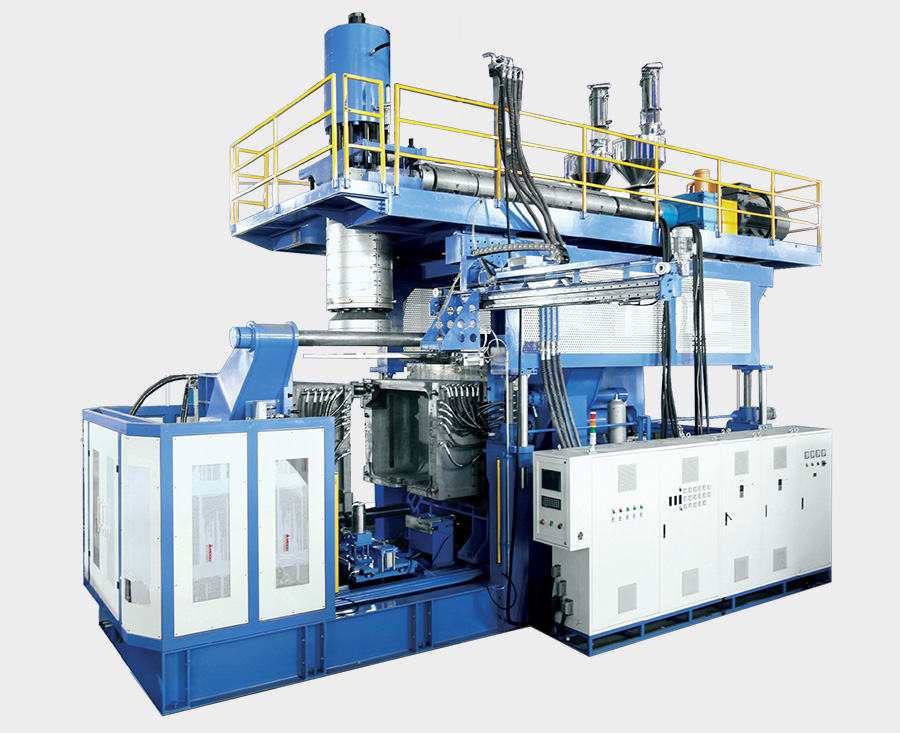
Multi-layer IBC tank production is attractive because it gives manufacturers more flexibility in material structure, appearance, and cost control. Yet it is also easy to misunderstand. A 2-layer or 3-layer IBC tank is not automatically better than a single-layer design. The correct structure depends on the packed liquid, customer requirement, local regulation, recycled material policy, wall-thickness target, and the factory’s ability to control material feeding. A multi-layer IBC tank blow molding machine must be selected as part of a complete material strategy, not as a decoration in the quotation.
For buyers, the key question is not “How many layers can the machine make?” The more useful question is “Which layer structure can produce a qualified IBC tank consistently at the required cost?” This difference matters because additional layers require more extruders, more dosing accuracy, more recipes, more operator training, and more quality control. If the factory cannot manage these details, the theoretical advantage of multi-layer production may turn into unstable production.
Layer Choice
Best Used When
Main Risk to Control
2-layer
A factory needs a simpler material-function separation
Layer-ratio instability or surface variation
3-layer
A factory needs more control over outer, middle, and inner functions
More complex dosing, temperature, and QC management
Single-layer
The market does not require functional layer separation
Less flexibility for material strategy
Why multi-layer production is used
In IBC tank manufacturing, each layer may serve a different function. One layer can provide the main mechanical strength. Another layer may control color or surface appearance. Another layer may allow approved recycled HDPE to be used in a controlled position, depending on the application and local rules. In some cases, the layer design supports brand requirements or helps separate contact and non-contact material functions.
This structure is especially important for industrial packaging markets where customers care about both strength and cost. A producer may want the outside surface to look clean and consistent while managing inner material strategy carefully. Another producer may need a structure that supports traceability and stable weight. The right design should be discussed together with the intended liquid, customer standard, bottle weight, wall distribution, and testing method.
2-layer IBC tank production
A 2-layer IBC tank usually gives a factory a relatively simple way to separate material functions. For example, the outer layer may be designed for appearance while the main layer provides structural performance. Compared with 3-layer production, 2-layer production normally requires fewer material streams and may be easier for operators to control. It can be a practical choice for factories that want more flexibility than single-layer production but do not want to manage a highly complex system.
The challenge is layer-ratio control. If one layer becomes too thin, surface appearance or function may become unstable. If the structural layer is not consistent, the IBC tank may fail during drop, stacking, or leakage-related tests. Therefore, the machine must include stable extrusion, accurate dosing, a suitable die head, and a control system that allows repeatable recipes. The material feeding system should also prevent contamination and color mixing.
3-layer IBC tank production
A 3-layer structure can provide more separation between functions. It may be used when the manufacturer wants an external layer, a middle layer, and an internal layer with different material strategies. This can help in projects where recycled material management, appearance, and contact surface requirements must be handled more carefully. However, 3-layer production is not simply a higher-end label. It is a more demanding process.
A 3-layer IBC tank blow molding machine needs more complete control over extruder output, melt temperature, layer ratio, and parison stability. The parison is large and heavy, so even small material-flow differences can affect wall distribution. The shoulder, corners, bottom, filling opening, and valve area need enough strength. If the layers are not stable, defects may appear as uneven color, weak areas, delamination risk, poor surface quality, or inconsistent product weight.
Recycled material must be planned carefully
Many buyers ask about recycled HDPE because raw material cost has a direct impact on profitability. Multi-layer production may allow controlled use of approved recycled material in certain positions, but the decision must be made carefully. The final product’s application, customer requirement, and regulatory environment must be confirmed first. A container used for industrial chemicals may have different requirements from one used for food-related materials.
Recycled material quality is also variable. Moisture, contamination, melt flow, color, and mechanical properties can affect production stability. A factory that plans to use recycled material needs not only a multi-layer machine but also a material inspection and storage system. The feeding system, mixing method, screen changer, dosing equipment, and quality tests must support the chosen structure. Otherwise, recycled material may reduce cost on paper while increasing scrap in reality.
Wall thickness control becomes more important
Large IBC tanks are difficult to mold because the parison stretches before the mold closes. Gravity, melt strength, extrusion speed, and mold shape all influence the final wall distribution. Multi-layer production adds another level of complexity because each layer must follow the target ratio while the total wall thickness remains suitable. The machine should therefore have a reliable parison programming system and enough extrusion stability.
Buyers should ask suppliers how wall thickness is controlled in the shoulder, body panel, bottom, corners, filling neck, and valve area. These zones carry different stresses. A beautiful surface does not guarantee mechanical performance. A strong IBC tank depends on controlled material distribution, stable cooling, accurate mold design, and correct testing.
Quality control should match the layer design
When a factory changes from single-layer to multi-layer production, quality control should also change. Operators should check product weight, layer ratio, surface appearance, wall thickness, dimensional stability, neck quality, valve area quality, and leakage performance. Recipes should be recorded clearly. Material batches should be traceable. If recycled material is used, incoming inspection becomes more important.
A good supplier should help define practical tests and operating procedures. Some quality problems do not appear immediately after molding. A weak corner, poor valve area, or uneven bottom may become visible during transport or customer use. The goal is to control the process upstream rather than rely only on final inspection.
What buyers should ask before choosing layers
Before selecting a 2-layer or 3-layer IBC tank production line, prepare the product specification. Include container capacity, bottle weight, layer target, raw material plan, intended liquid, customer standard, output requirement, local utility conditions, and any recycled material policy. Then ask the supplier to recommend a structure and explain the reason.
Important questions include: how many extruders are included, how material dosing is controlled, how recipes are saved, how color changes are handled, how scrap is managed, what cooling capacity is required, and how layer stability is checked. The supplier should also explain what training is needed because multi-layer production depends heavily on operator discipline.
A balanced approach is better than a fashionable option
Multi-layer IBC tank blow molding can improve flexibility, but it should serve a clear production purpose. A 2-layer solution may be the right choice for one factory, while a 3-layer solution may be necessary for another. In some cases, a stable single-layer line may be more suitable for the market. The best configuration is the one that matches product requirements, material strategy, labor skill, quality control, and long-term cost.
For buyers, the safest decision is to discuss the finished IBC tank first and the machine configuration second. When the layer design is planned around real packaging requirements, the production line can deliver stable quality, better material control, and a stronger business case.
Publishing Element
Recommendation
Internal links
IBC Tank Blow Molding Machine page; IBC Full Production Line page; Material Feeding System page; Contact Engineering Team page
Image ALT ideas
2 layer and 3 layer IBC tank blow molding process; multi layer HDPE IBC tank neck structure; material feeding and dosing system for IBC tank production; IBC tank wall thickness control in blow molding