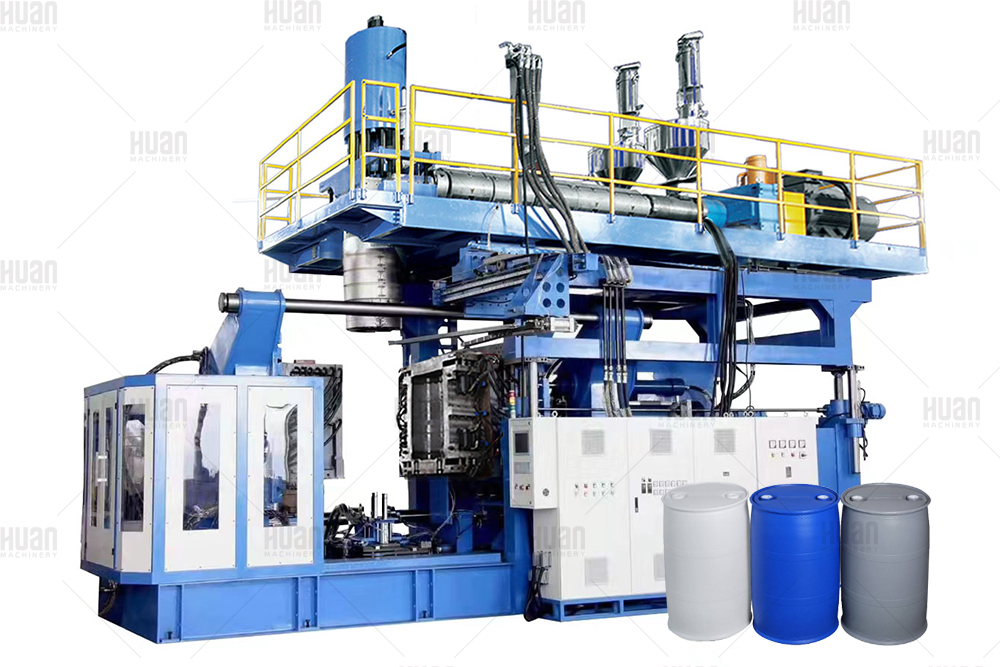
Automation should solve a measured production problem
A full automatic 220L plastic drum production line can improve output, reduce handling, stabilize quality, and support larger orders. But automation should not be purchased only because it looks modern. It should solve a measured problem: labor shortage, unstable quality, heavy handling, high scrap, frequent bottlenecks, limited output, or rising customer requirements.
Factories upgrading from manual or semi-automatic production should begin with production data. How many accepted drums are produced per shift? How much time is lost to handling? Where does scrap occur? How many operators are needed? How often does the line stop? Without these numbers, payback becomes guesswork.
High speed is useful only when the downstream process can keep up
A high speed 220L drum forming production line may increase molded output, but it can also expose weak downstream stations. If trimming, cooling, leak testing, marking, transfer, or packing cannot keep pace, products accumulate and operators must intervene. The upgrade should therefore evaluate the whole line, not only the main machine.
Buyers should send your current production data to compare manual, semi-automatic, and automatic options. A good supplier will ask about accepted output, labor arrangement, product mix, building space, utilities, and quality requirements before recommending automation scope.
Signal | What it means | Possible upgrade |
High labor handling | Operators spend too much time moving drums | Conveyors, transfer devices and fixtures |
Unstable inspection | Rejects depend on operator judgment | Defined leak testing and data records |
Output bottleneck | Orders exceed accepted daily capacity | Faster forming and balanced downstream line |
High energy per accepted drum | Production stops or rejects waste energy | Process stability and energy-focused equipment review |
Energy saving must be connected to accepted output
An energy saving 220L drum blow molding machine can reduce energy use through improved drive systems, heating control, cooling efficiency, and better process stability. However, energy saving should be measured per accepted drum, not only by machine power rating. A machine that consumes less power but creates more rejects may not reduce total cost.
Factories should review energy together with cycle time, scrap rate, start-up loss, and downtime. This creates a realistic payback model and prevents exaggerated expectations. The supplier should explain which energy-related features are included and which depend on local utilities and operating habits.
Input | Why it matters | Data source |
Accepted drums per shift | Measures real output | Production records |
Labor per shift | Shows automation saving potential | Shift schedule |
Reject and scrap rate | Connects quality to cost | Quality report |
Energy cost | Calculates running cost impact | Utility bill and machine data |
Order forecast | Shows whether capacity will be used | Sales plan |
Automation scope can be staged
Not every factory needs the same level of automation immediately. One plant may need automatic product transfer and leak testing. Another may need better mold changing and material feeding first. A third may need an integrated line because large customers require stable delivery and traceability.
A China 220L drum blow molding machine manufacturer can provide different configurations, but the buyer should request an automation upgrade plan that compares current bottlenecks with proposed equipment. The plan should show what changes now, what can be added later, and what building preparation is required.
Global keyword planning can support market expansion
If the factory sells into Spanish-speaking markets, the search phrase máquina sopladora de bidones 220 litros may be useful in multilingual SEO or regional landing pages. However, the product itself still needs credible technical content: output, drum types, testing, automation level, and service support. Translation alone will not replace engineering value.
Factories that combine automation with better marketing can attract higher-intent buyers. A line that produces stable drums, keeps records, and demonstrates actual production scenes gives the sales team stronger material for overseas promotion.
Scope | Best for | Main caution |
Targeted automation | Factory has one or two clear bottlenecks | Do not ignore future integration |
Semi-automatic line upgrade | Growing plant with mixed products | Balance labor saving with changeover flexibility |
Full automatic line | High-volume orders and stable SKU demand | Requires stronger utilities, layout and management |
Staged upgrade | Plant wants lower risk and future path | Needs clear expansion drawing from the start |
How to compare upgrade proposals fairly
Automation proposals can look very different because suppliers may include different scopes. One proposal may include only the main machine upgrade. Another may include conveyors, trimming, testing, material feeding, installation, and spare parts. Before comparing price, the buyer should normalize the scope and identify what is included, optional, excluded, or prepared by the buyer.
The buyer should also ask suppliers to explain the assumptions behind output. Is the figure based on molded drums or accepted finished drums? What product weight is assumed? How many operating hours are used? Does the calculation include changeover, maintenance, testing, and reject handling? These questions reveal whether the proposal is realistic.
Payback should be calculated as a range. Material cost, electricity, labor, order volume, selling price, and scrap rate can change. A range-based model is more credible than one exact payback number. It also helps management decide whether to upgrade all at once or in stages.
Finally, the upgrade plan should include training and management changes. A more automatic line needs operators who can monitor data, react to alarms, maintain equipment, and follow quality records. Without these routines, automation may improve movement but fail to improve factory performance.
Publishing note for drum manufacturing inquiries
This article should be published as a decision-support page for buyers comparing 200L and 220L drum equipment. The primary keyword full automatic 220L plastic drum production line should remain visible in the SEO title and early body copy, while related terms should be used naturally in tables, captions, and image ALT text. The goal is to attract commercial visitors without making the page feel like repeated keyword stuffing.
For visual support, use one mold or machine-detail image, one production-line or factory-layout image, and one finished-drum or inspection image. If the article mentions quality, testing, or traceability, place a relevant inspection photo near that paragraph. Good image placement increases user trust and gives the sales team a more convincing page to share with overseas customers.
Conclusion: upgrade when the bottleneck is clear
The right time to upgrade is when production data show that automation can solve a real constraint. Buyers should study output, labor, defects, energy, downstream speed, and future order demand before choosing a full automatic system. A carefully planned upgrade can improve efficiency without creating unnecessary investment pressure.