Home » About Us » HUAN News » Blog » UN Certified 220L Drum Production Line: Building Quality Records for Chemical and Export Packaging
UN Certified 220L Drum Production Line: Building Quality Records for Chemical and Export Packaging
Views: 1 Author: Site Editor Publish Time: 05-08-2026 Origin: Site
A UN certified 220L drum production line should be discussed carefully. The production line can support controlled manufacturing, but the finished drum’s certification depends on design, testing, standards, approvals, and the intended application. For chemical and export packaging, the manufacturing process must produce consistent drums and maintain records that help trace quality from material to shipment.
Buyers comparing a 220L chemical barrel production line supplier should ask how the line controls resin, parison distribution, ring formation, neck or opening quality, leak testing, visual inspection, and batch records. A drum that looks acceptable is not enough. Industrial packaging customers need repeatable strength, sealing, and handling performance.
Quality control begins with product specification
Before equipment selection, the buyer should define the drum type, nominal volume, weight, material, layer structure, ring design, opening type, closure system, stacking requirement, and target market. Closed-top and open-head drums may require different molds, trimming, closure installation, testing, and handling. The production line must match the final product design.
Specification Item
Why It Matters
Production-Line Impact
Closed-top or open-head design
Defines opening and closure method
Different mold and finishing requirements
Double L-ring structure
Affects handling and stacking strength
Parison control and mold design around rings
Target weight
Controls material cost and performance
Wall-thickness sampling and recipe management
Chemical application
Influences resin and closure expectations
Material control and compatibility review
Export or domestic market
May require different records or testing
Traceability and documentation planning
Material and recipe records protect consistency
A 200L chemical drum production equipment project should include material identification, batch records, color or additive control, operator record, and machine recipe record. Without these records, it is difficult to investigate defects or prove that a production batch followed the approved process.
Record checklist:
·Resin lot: Useful Detail: Supplier, grade, batch, receiving date; Why Buyers Need It: Connects material to production batch.
·Operator and shift: Useful Detail: Team and production time; Why Buyers Need It: Helps trace process changes.
·Product weight: Useful Detail: Actual weight and sample quantity; Why Buyers Need It: Controls cost and quality.
·Rejection log: Useful Detail: Defect type and corrective action; Why Buyers Need It: Improves process over time.
Wall-thickness and ring control are critical
In 220L drum production, the ring areas, shoulder, body, base, and opening region experience different stress. A 220L closed top drum production line should not rely only on average weight. It should control where the material goes. A heavy drum can still fail if the wrong area is thin.
Drum Area checklist:
·Double L-ring: Typical Risk: Thin ring or deformation; Recommended Check: Wall-thickness points around ring profile.
·Body panel: Typical Risk: Weak impact resistance or deformation; Recommended Check: Panel thickness and visual inspection.
·Base: Typical Risk: Rocking or weak support; Recommended Check: Base flatness and thickness check.
Leak testing is one of the most visible quality gates, but the method must be defined. Test pressure, holding time, pass/fail threshold, drum identification, calibration, and rejection route should be clear. A UN certified 220L drum production line should make testing part of the production record, not a separate manual note that can be lost.
Testing Item
Minimum Definition
Reason
Test method
Pressure, time, acceptance threshold
Makes results repeatable
Calibration
Schedule and reference method
Protects test credibility
Product ID
Batch, shift, and test result link
Supports traceability
Rejected drum handling
Physical separation and record
Prevents accidental shipment
Corrective action
Cause review and process adjustment
Reduces repeated defects
Quick note: Good certification-support mindset - Design the production line to control the process and keep records that support inspection, testing, and customer confidence. Weak mindset - Assume that buying equipment alone creates certified products. Certification depends on product design, testing, standards, and documentation.
Discuss quality requirements before purchasing
Buyers should share product drawings, target weight, closure details, intended liquid, stacking expectation, testing standard, and required records before ordering. The supplier can then recommend mold design, testing stations, data records, and quality checkpoints that support the buyer’s market.
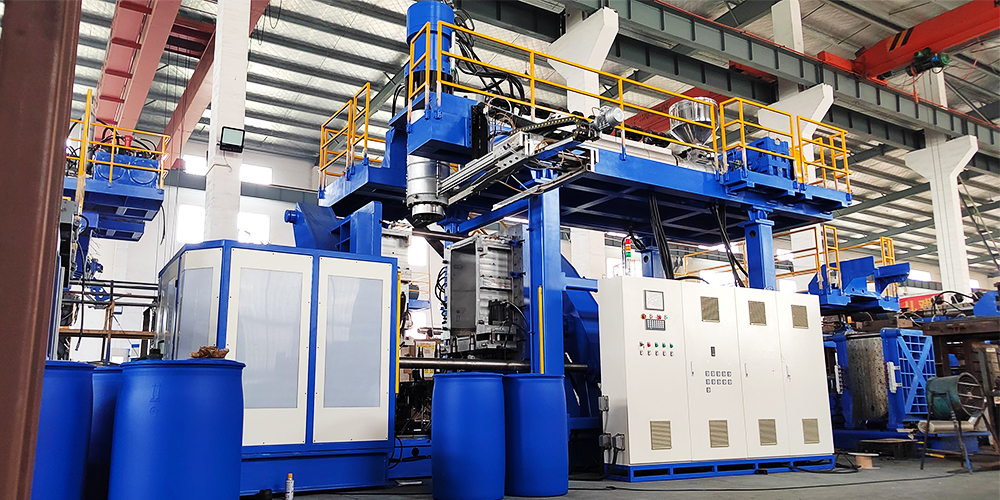
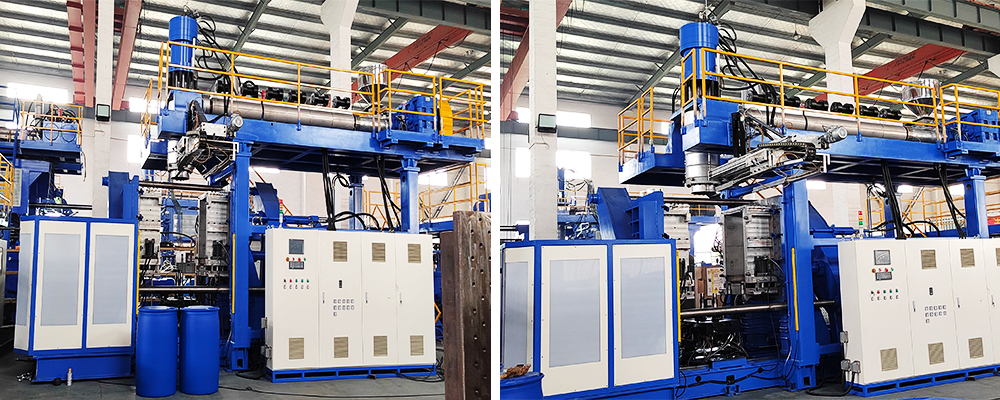
Suggested image layout: Opening - 220L chemical drum line overview (ALT: UN certified 220L drum production line for chemical and export packaging); Wall-thickness section - Double L-ring drum close-up (ALT: 220L plastic drum blow molding machine double L-ring wall thickness control); Testing section - Leak testing station (ALT: 220L drum full production line leak testing and quality record).
Create a simple corrective-action loop
Quality records are useful only when the factory responds to them. If leak failures increase, the team should check neck trimming, closure installation, parison distribution, and cooling conditions. If weight varies, material feeding and recipe settings should be reviewed. If ring thickness drifts, mold cooling and parison programming may need adjustment. The record should trigger action, not sit in a folder.
Quality Signal
Possible Cause
Corrective Action
Leak failure rises
Opening defect or closure mismatch
Review trimming, cap fit, and test settings
Weight variation increases
Material feeding instability
Check feeder, resin flow, and recipe
Ring thin spots
Parison distribution issue
Adjust wall-thickness program and inspect mold cooling
Surface defects
Temperature or contamination issue
Check material storage and melt conditions
Dimensional drift
Cooling or demolding instability
Review mold temperature and cycle time
This corrective-action mindset helps the page appeal to technical buyers because it shows how the production line is managed after installation, not only how the machine is purchased.
Train the team to read quality trends
A new 220L drum factory should not wait for customer complaints to study quality data. Operators, quality inspectors, and maintenance staff should review trends such as average weight, minimum wall thickness, leak test failure rate, trimming defects, and dimensional drift. Small changes often appear in data before they become large production problems.
Trend to Review checklist:
·Average drum weight: Early Warning: Gradual increase or decrease; Team Response: Check recipe and parison program.
·Leak test failures: Early Warning: Failures concentrated in one shift; Team Response: Review operator method and trimming tool.
·Wall-thickness map: Early Warning: Thin area repeats in same location; Team Response: Adjust mold cooling or material distribution.
·Visual defects: Early Warning: Color or surface issue by batch; Team Response: Check material and temperature stability.
This habit turns the production line into a controlled manufacturing system. It also gives industrial customers more confidence because the factory can explain how it monitors and improves drum quality over time.