Home » About Us » HUAN News » Blog » Jerry Can Mold Family Planning: How to Build 5L, 10L, 20L, and 25L Containers Without Losing Cap Compatibility
Jerry Can Mold Family Planning: How to Build 5L, 10L, 20L, and 25L Containers Without Losing Cap Compatibility
Views: 0 Author: Site Editor Publish Time: 10-09-2026 Origin: Site
A product family is not simply several molds placed beside one machine
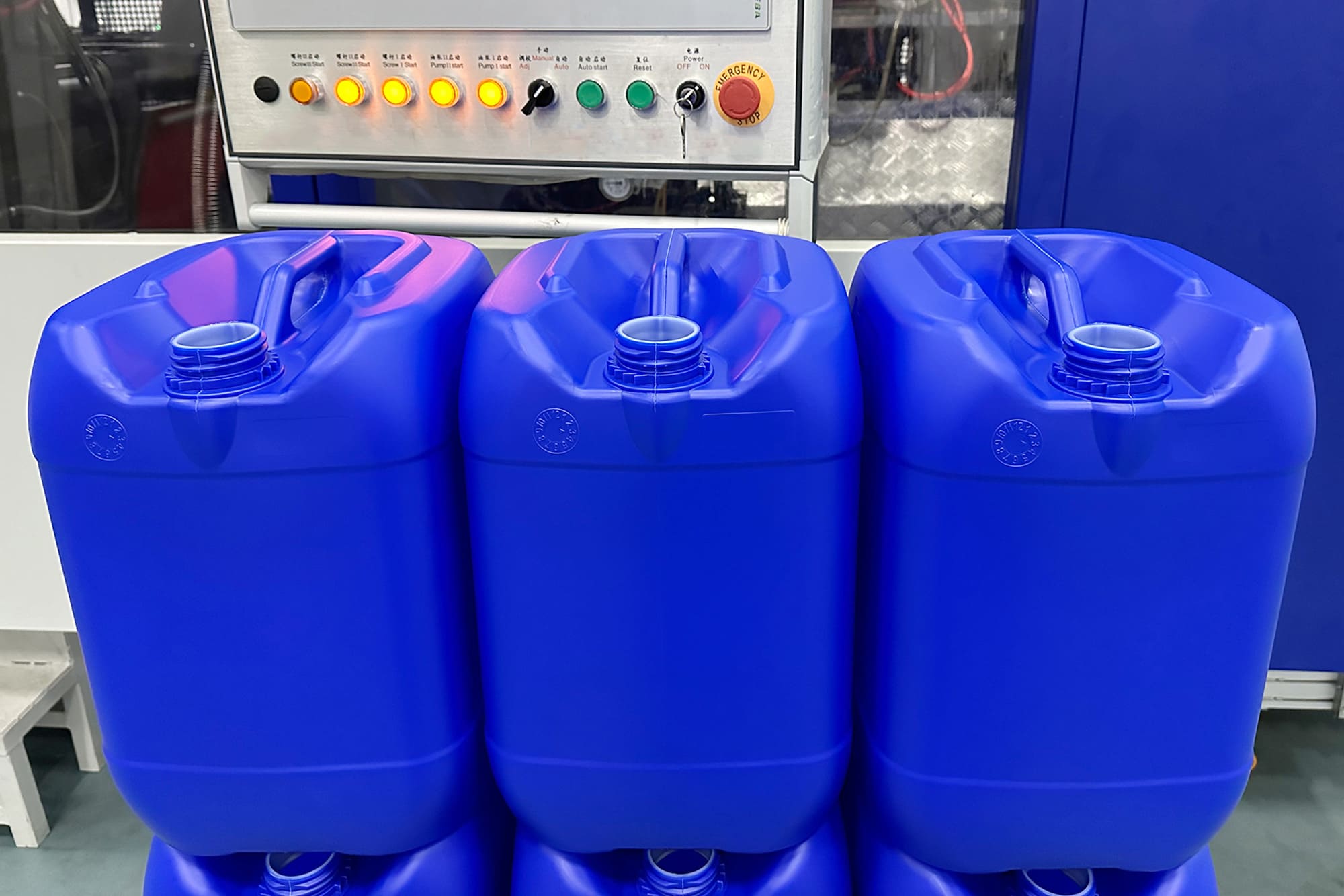
Many factories want one production project to cover 5L, 10L, 20L, 25L, or similar jerry can sizes. The business idea is reasonable: a wider product family can serve lubricants, chemicals, detergents, agrochemicals, and industrial liquids. The risk is that each size may demand a different mold size, cycle rhythm, handle geometry, neck finish, label area, and downstream handling method. If these details are not planned together, the factory may own several molds but still struggle to supply a consistent product range.
Ajerry can making machine should therefore be selected together with a mold-family strategy. The buyer needs to know which sizes are primary, which sizes are occasional, which caps must remain common, and which containers require unique necks. Cap compatibility is especially important because the container must work with filling lines, sealing systems, cartons, pallets, and end-user handling. A container that looks right but fails cap fit can create complaints long after production.
Table 1. Product-family planning matrix
Container Size
Typical Concern
Mold Planning Point
Downstream Check
5L to 10L
Higher quantity and retail appearance
Cavity count, cooling, label area
Fast trimming, cap fit, packing speed
15L to 20L
Balance of output and strength
Handle design, neck finish, weight control
Stacking and carton compatibility
25L
Strength, handle comfort, industrial use
Clamp force, mold cooling, parison control
Leak testing and pallet movement
Mixed family
Frequent changeover
Mold storage and recipe discipline
Order grouping and color planning
Start by protecting the neck and closure system
The neck is a small area with a large commercial impact. It controls cap fit, leakage risk, filling-line compatibility, tamper-evident options, sealing performance, and user experience. When a factory develops several jerry can sizes, it may be tempted to use one closure family across all products. This can simplify purchasing and inventory, but only if each mold produces a stable neck finish and the downstream trimming method is controlled.
A good plastic jerry can making machine project should discuss neck design before mold manufacturing begins. Buyers should send cap samples, thread drawings, filling-machine requirements, sealing method, and any customer-specific closure expectations. The supplier can then evaluate whether the neck should be shared across sizes or modified for stronger performance. This prevents late redesign after the mold is already completed.
Table 2. Closure compatibility checklist
Item
Question to Ask
Why It Matters
Thread profile
Does the cap tighten smoothly across all sizes?
Prevents leakage and customer complaints
Sealing surface
Is the neck top flat and consistent?
Supports liners and induction sealing
Trimming method
Is the cut clean and repeatable?
Protects cap fit and appearance
Filling-line fit
Does the opening match customer equipment?
Avoids problems after shipment
Match machine size with the heaviest and most frequent product
The largest container is not always the only deciding factor. A 25L jerry can may need more clamp force, stronger mold support, and longer cooling time. A smaller container may require higher output, more cavities, faster downstream handling, and more frequent packing. The correct machine decision depends on the mix of volume, product size, product weight, cycle target, and changeover frequency.
When buyers compare a 25L jerry can making machine with a smaller or multi-purpose configuration, they should ask which mold sizes will run most often. If the factory expects 25L orders to dominate, the line should be optimized for that product first. If the factory expects many small-batch SKUs, quick changeover, organized mold storage, and cap inventory discipline may become more valuable than the highest possible speed on one size.
Plan label areas, handle comfort, and stacking together
A jerry can is not only a hollow shape. The side panel must support a label, the handle must feel strong, the base must stand well, the corners must resist transport damage, and the container must work with cartons or pallets. When each size is designed separately, the product range can look inconsistent. When the family is planned, the brand owner can keep a similar style while adjusting volume and strength.
For a jerry can blow molding machine factory, family planning also makes quality control easier. Inspection points can be standardized across sizes: neck dimension, cap fit, handle section, bottom stability, weight, leakage, and appearance. Buyers who want several molds can request mold layout advice before deciding which size should be developed first and which should be added later.
Table 3. Mold changeover data to record
Record
Use in Production Planning
Example Decision
Changeover time
Shows real downtime
Group small orders by size or color
Scrap after restart
Shows how difficult a product is to stabilize
Adjust training or recipe control
Operator steps
Identifies unsafe or slow actions
Improve fixtures and storage
Cap-fit result
Confirms the new run is approved
Release production only after check
Use changeover data to decide whether a broad family is profitable
A broad product range can attract more customers, but it can also increase downtime if the factory changes molds, colors, necks, or material recipes too often. The sales team may enjoy offering many sizes, while production carries the hidden cost. The solution is not to reduce the product range blindly. The solution is to understand the cost of each change and group orders intelligently.
When publishing this article, add diagrams showing neck consistency, mold families, and cap samples. The article should invite readers to send your sample drawing together with desired sizes, closure information, and annual demand. This creates better inquiries than a general price request because the supplier can recommend a machine and mold plan around the actual product family.