Home » About Us » HUAN News » Blog » 220L Drum Machine Double L-Ring Drum Mold and Parison Control: How to Improve Strength and Weight Consistency
220L Drum Machine Double L-Ring Drum Mold and Parison Control: How to Improve Strength and Weight Consistency
Views: 1 Author: Site Editor Publish Time: 23-07-2026 Origin: Site
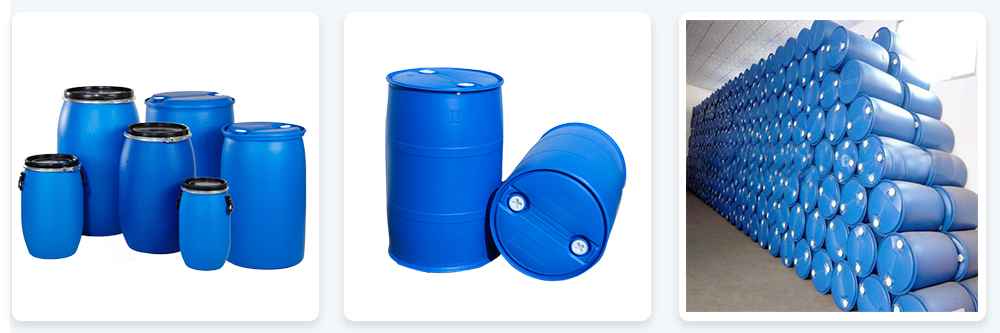
The double L-ring drum is widely used because its ring structure supports handling, stacking, and industrial transport. But producing a strong 220L double L-ring drum is not simply a matter of using a large blow molding machine. The mold, parison programming, cooling design, material distribution, and process stability must work together. If these details are weak, the drum may look acceptable but fail in weight consistency, ring strength, base stability, or leakage performance.
For buyers comparing a 220L plastic drum blow molding machine, mold and parison control should receive as much attention as machine size. The shape of a double L-ring drum creates areas that need extra material and accurate forming. A stable process places HDPE where the drum needs strength without wasting unnecessary material.
Mold structure
Parison control
Controls drum shape, ring definition, and repeatability.
Controls wall thickness in the body, ring, shoulder, and bottom.
Cooling system
Weight strategy
Controls stability, cycle time, and deformation risk.
Balances material cost against strength and transport performance.
Issue
Likely Cause
Layout Suggestion
Weak ring area
Poor material distribution
Add close-up ring diagram
Overweight product
No weight-control strategy
Add weight/cost comparison table
Deformation
Cooling or cycle instability
Add process-control callout
Why the ring structure matters
The L-ring structure helps the drum handle mechanical stress. It supports rolling, gripping, stacking, and movement during transport. The rings also affect how the drum interacts with pallets, conveyors, and warehouse handling. If the ring is too weak, uneven, or poorly formed, the drum may deform or become difficult to handle.
Because the ring area has a complex shape, it requires careful mold design and material distribution. A thin ring can reduce strength. An overly heavy ring can increase cost and cooling time. The goal is balanced strength, not simply more material.
Parison control determines where the material goes
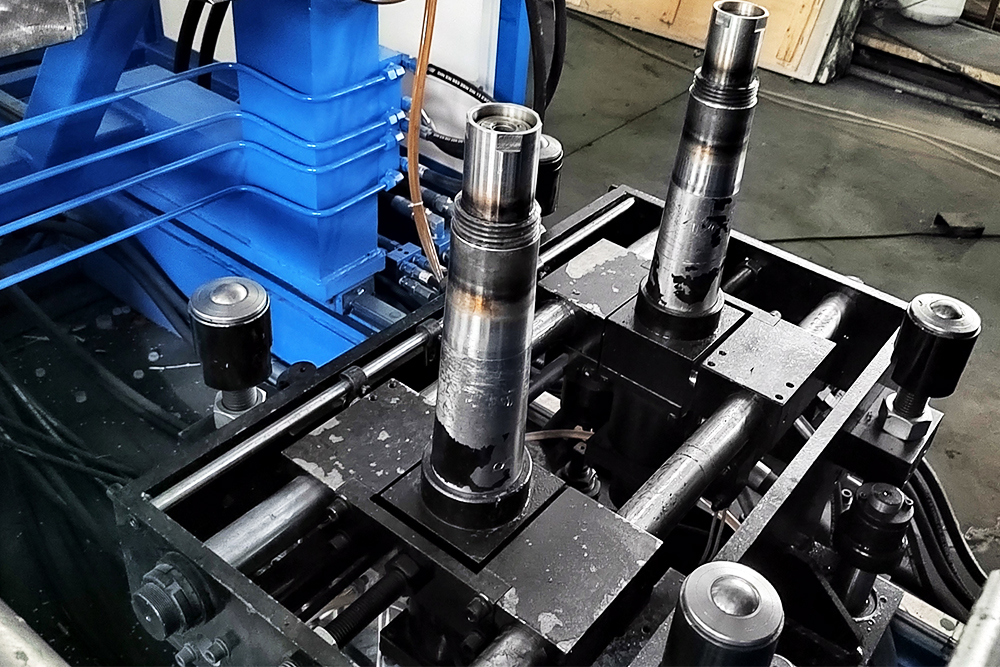
During extrusion blow molding, the parison hangs before the mold closes. For a 220L drum, the parison is heavy and changes shape under gravity. The machine must control the wall thickness along the parison so that critical areas receive enough material. This is especially important for the rings, shoulder, sidewall, base, and closure area.
A reliable extrusion blow molding machine for 220L drum production should have stable extrusion and accurate parison programming. Operators should be able to save and repeat recipes. If the parison changes from cycle to cycle, the drum weight and wall distribution will change, leading to unstable quality.
Mold design shapes the final performance
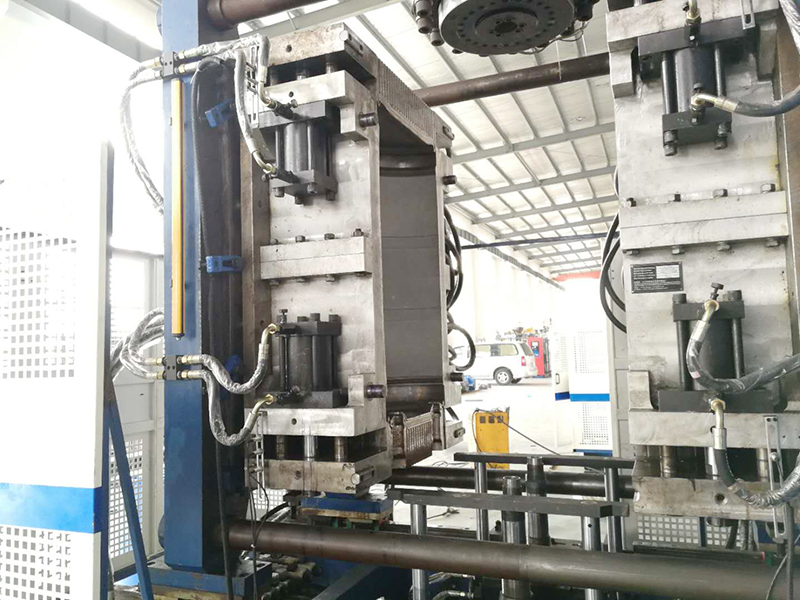
The mold must form the drum body, rings, closure area, base, and parting line accurately. Cooling channels should be designed to handle thick and thin areas properly. Venting should allow the material to form cleanly without surface defects. The mold surface and machining accuracy influence appearance and demolding.
A good double L-ring mold is not only a shape tool; it is a production tool. It should support stable cycle time, consistent dimensions, manageable flash, and long service life. Buyers should ask about mold material, machining process, cooling design, spare parts, and sample approval.
Wall thickness should be checked by zone
It is not enough to measure only total drum weight. Wall thickness should be checked at the ring area, sidewall, corner transition, base, shoulder, and closure zone. These areas face different stress during filling and handling. If material distribution is poor, the drum may fail even when the total weight appears acceptable.
During trial production, buyers should request multiple samples from continuous running. The samples should be measured and compared. Consistency matters. A single good sample does not prove that the machine can maintain quality during daily production.
Cooling affects ring shape and cycle time
The double L-ring area may require more cooling attention because of its geometry. Uneven cooling can create deformation, shrinkage differences, or difficulty maintaining dimensions. A mold with effective cooling can improve both quality and output. However, cooling also depends on the factory’s water system.
The supplier should specify cooling-water requirements clearly. If the buyer’s facility cannot provide stable temperature and flow, the machine may need longer cycles or produce unstable drums. Cooling design and utility planning should therefore be discussed together.
Weight optimization should be data-based
Chemical packaging manufacturers often want to reduce drum weight to lower material cost. Weight optimization is possible, but it must be handled with testing. Reducing material in the wrong zone can weaken the rings, base, or closure area. A drum that saves a small amount of resin but fails in transport is not economical.
A responsible optimization program begins with the target application. What liquid will the drum hold? How will it be transported? What stacking condition is expected? What customer tests are required? Once the conditions are clear, the supplier can adjust parison programming, mold design, and process settings to reduce excess material while protecting strength.
Process repeatability protects quality
A 220L drum production line should not rely on constant manual adjustment. Temperature, extrusion speed, parison program, cooling time, and mold movement should be repeatable. The control system should allow operators to save recipes for each product. Alarms should help identify abnormal conditions before defects increase.
Repeatability is especially important for factories producing multiple drum types or colors. If each changeover requires long manual tuning, output and quality will suffer. A stable machine and clear operating procedure reduce dependence on individual operator experience.
What buyers should ask during supplier evaluation
Ask the supplier to explain how the machine controls parison thickness, how the mold is designed for the double L-ring structure, how cooling is arranged, and how sample quality is verified. Request sample photos, weight data, wall-thickness checks, and output assumptions. If possible, inspect a running machine producing a similar drum.
Also ask about maintenance. Large molds require careful handling, cleaning, and inspection. The supplier should provide guidance on lubrication, cooling-channel maintenance, mold installation, and spare parts. Long-term drum quality depends on both initial design and maintenance discipline.
Strong drums begin with controlled forming
The double L-ring drum is a functional industrial container. Its strength comes from controlled material distribution, accurate mold design, stable cooling, and repeatable process settings. Buyers should look beyond the machine’s external appearance and evaluate how the system creates consistent drums.
For a new project, it is also useful to keep approved samples from the first stable trial. These samples become a reference for future comparison when the factory changes material, replaces a mold component, or trains new operators. A clear benchmark helps the production team protect the original standard instead of adjusting the process based only on experience.
A good 220L plastic drum blow molding machine supplier will help the buyer understand the relationship between mold design, parison control, weight, strength, and cost. This technical support can be more valuable than a simple equipment quotation because it protects daily production performance.