Home » About Us » HUAN News » Blog » 220L Drum Leak Testing and Traceability: Building a Quality System for Industrial Liquid Packaging
220L Drum Leak Testing and Traceability: Building a Quality System for Industrial Liquid Packaging
Views: 2 Author: Site Editor Publish Time: 20-08-2026 Origin: Site
Leak testing is one part of a complete quality system
Buyers interested in a UN certified 220L drum production line often focus on final testing. Final testing is important, but a strong quality system begins earlier. Material control, extrusion stability, wall-thickness distribution, mold cooling, closure accuracy, trimming, handling, and production records all influence whether a drum can meet demanding customer expectations.
The exact certification or approval pathway depends on market, drum design, testing program, and regulatory requirements. Equipment alone does not guarantee certification. However, a well-designed line can support the controlled production and traceability that industrial packaging customers expect.
Closed-top and open-head drums need different inspection logic
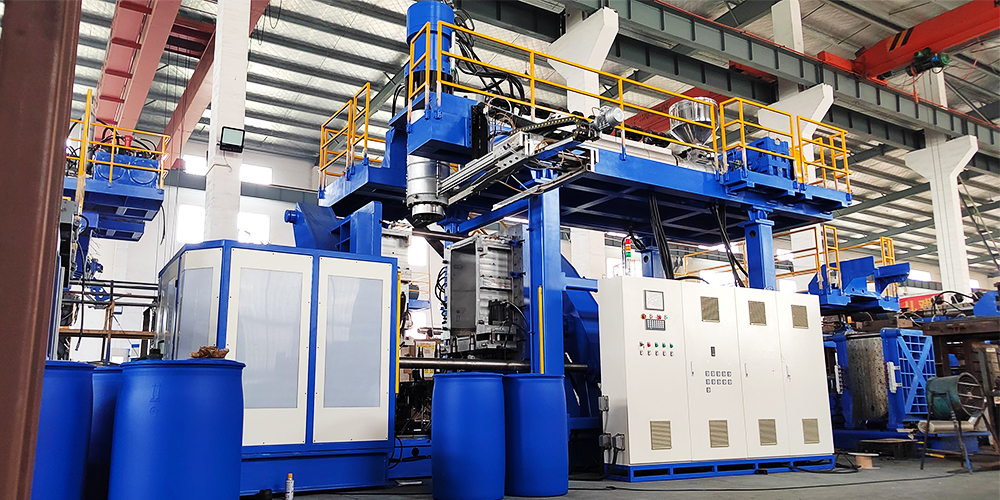
A 220L closed top drum production line must pay close attention to neck, closure, sealing area, body wall, and pressure behavior. A closed-top drum is often used for liquids that require reliable sealing during transport and storage. Leak testing and closure checks are therefore central to daily quality control.
220L open head drum manufacturing equipment may involve different top geometry and closure components. The inspection plan may include rim quality, lid fit, clamp compatibility, wall strength, and handling performance. Buyers producing both styles should not use one inspection checklist for all products without adjustment.
Gate
What to check
Why it matters
Material feeding
Grade, lot and return-material control
Prevents hidden process variation
Blow molding
Weight, wall distribution and surface quality
Controls strength and appearance
Closure or rim area
Neck, cap, lid or rim accuracy
Supports sealing and filling compatibility
Leak testing
Defined method and rejection process
Prevents defective drums reaching customers
Traceability links the product to the production condition
Traceability does not need to be complex at the start. A practical system records material lot, production date, shift, machine recipe, mold, operator, weight, wall-thickness checks, leak-test result, and rejection reason. This information helps the factory respond when customers ask for evidence or when internal defects need root-cause analysis.
A220L HDPE drum blow molding equipmentsupplier can provide equipment suggestions, but the buyer should define what data must be collected and how it will be stored. If the line will later become more automated, data requirements should be discussed before control-system design is finalized.
Drum type
Critical inspection point
Common risk
Closed-top
Neck, closure, pressure and leakage
Sealing failure during transport
Open-head
Rim, lid fit and clamp compatibility
Poor closure or customer filling issue
Both types
Wall balance and base stability
Handling damage or stacking problem
Both types
Traceability record
Hard complaint investigation
Leak-test method should match product requirement
The leak-test method, pressure, holding time, detection sensitivity, calibration process, and reject handling must be clearly defined. A vague quotation line that says “leak tester included” is not enough for serious industrial packaging. Buyers should ask what the tester checks, how failures are identified, and how operators confirm the tester is functioning correctly.
When buyers compare manual, semi-automatic, and full automatic 220L plastic drum production line options, quality control should remain central. Automation can improve repeatability, but only when the test parameters and rejection logic are correct. Buyers can ask for a quality-gate plan before finalizing equipment scope.
Use defect response rules, not only defect labels
Recording a defect is useful, but responding to it is more important. If leak failures increase, the team should know whether to check closure area, trimming, wall distribution, mold cooling, material condition, or handling damage. If visual defects increase, the reaction may involve melt temperature, material cleanliness, or cooling balance.
Factories planning export or high-standard customers can request traceability support and include record design in the project. This helps the line generate useful data from the beginning instead of adding paperwork after customers request it.
Record field
Purpose
Example entry
Material lot
Connects product to raw material
HDPE lot and color batch
Machine recipe
Links quality to process setting
Recipe number and change time
Test result
Confirms accepted or rejected status
Pass, fail and reason
Operator and shift
Supports internal review
Shift A / operator code
How to present traceability without overclaiming
Traceability is a strong marketing point, but it must be presented carefully. The article should not suggest that equipment automatically grants certification or market approval. A better message is that the line can be designed to support controlled production, record keeping, inspection routines, and customer-specific quality requirements.
Photos or diagrams can strengthen the page. Suggested images include material records, drum weight measurement, leak testing station, closure inspection, reject separation, and finished drums with batch identification. Each image should be close to the paragraph it supports, rather than collected at the bottom of the page.
The sales team can use this article when customers ask about quality assurance. Instead of replying with only a machine quotation, the team can send the article and explain which inspection functions are included, optional, or customer-defined. This builds trust and helps buyers understand why a complete solution may cost more than a basic machine.
If the factory already has customer requirements for export packaging, those requirements should be converted into a project checklist before ordering equipment. This helps the supplier configure the line correctly and avoids adding traceability functions too late.
Publishing note for drum manufacturing inquiries
This article should be published as a decision-support page for buyers comparing 200L and 220L drum equipment. The primary keyword UN certified 220L drum production line should remain visible in the SEO title and early body copy, while related terms should be used naturally in tables, captions, and image ALT text. The goal is to attract commercial visitors without making the page feel like repeated keyword stuffing.
For visual support, use one mold or machine-detail image, one production-line or factory-layout image, and one finished-drum or inspection image. If the article mentions quality, testing, or traceability, place a relevant inspection photo near that paragraph. Good image placement increases user trust and gives the sales team a more convincing page to share with overseas customers.
Conclusion: traceable quality improves both trust and efficiency
A strong 220L drum quality system is not built by inspection alone. It is built by connecting process control, leak testing, product records, defect response, and continuous improvement. Buyers who discuss these needs early will receive better line proposals and operate with fewer surprises after installation.