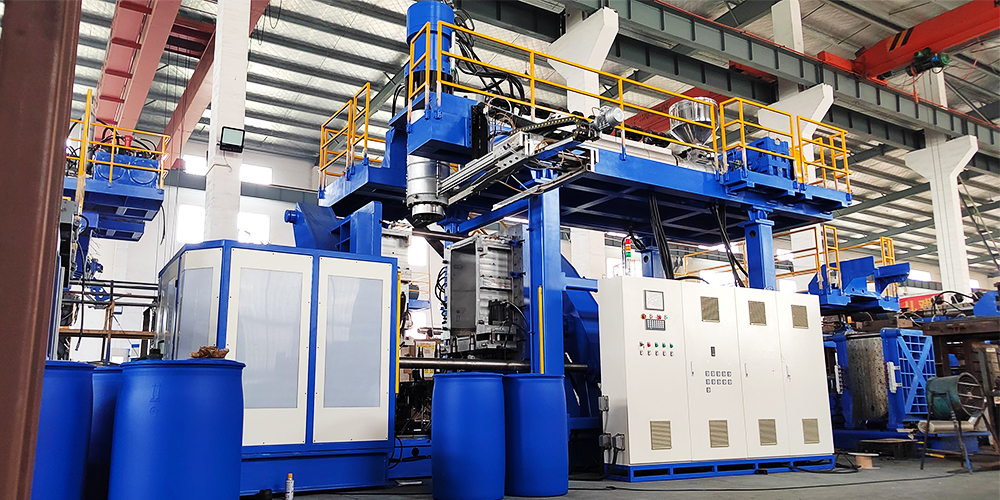
Automation in 220L drum production should solve real factory problems, not simply make the quotation look advanced. Large HDPE drums are heavy, bulky, and difficult to handle manually at high output. A full automatic 220L plastic drum production line can reduce labor, improve consistency, and support stable production, but only when automation is planned around the complete workflow: blow molding, trimming, cooling, leak testing, conveying, rejection handling, scrap recycling, and finished product storage.
The best automation plan begins with the question: where does manual handling create cost, risk, or instability? In some factories, the main challenge is removing and trimming large drums. In others, it is leak testing speed, cooling space, or finished product transfer. The right solution depends on the product, output target, labor cost, and factory layout.
1 Blow molding | 2 Deflashing | 3 Cooling | 4 Leak testing | 5 Conveying | 6 Packing |
Automation Point | Benefit | Risk If Ignored |
Automatic transfer | Reduces manual handling | Containers accumulate near the machine |
Downstream testing | Improves quality control | Rejected products are discovered too late |
Balanced conveyors | Stabilizes output | Line speed depends on operators |
Automation starts at material preparation
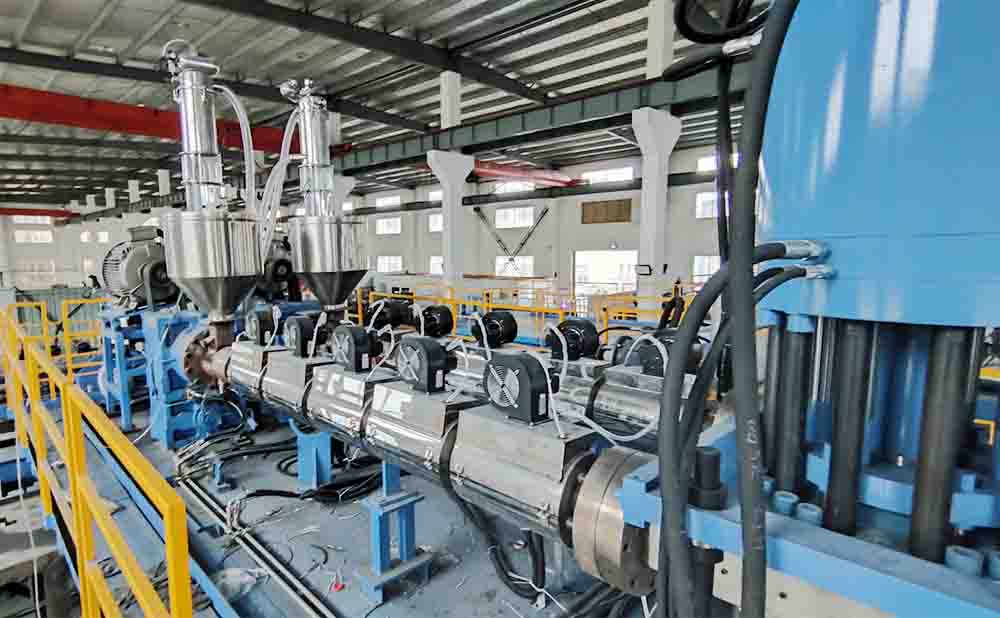
Before the drum is formed, the material system must supply resin consistently. Automatic feeding, mixing, and dosing help stabilize extrusion. If the line uses color masterbatch or controlled recycled material, dosing accuracy becomes important. Material instability can reduce the benefit of downstream automation because poor products will still be rejected.
A complete 220L HDPE drum production line should include a material flow that is clean, easy to operate, and suitable for continuous production. Operators should not need to carry material manually during normal running. Stable material supply supports stable parison formation, which supports stable drum quality.
Product take-out and transfer reduce manual load
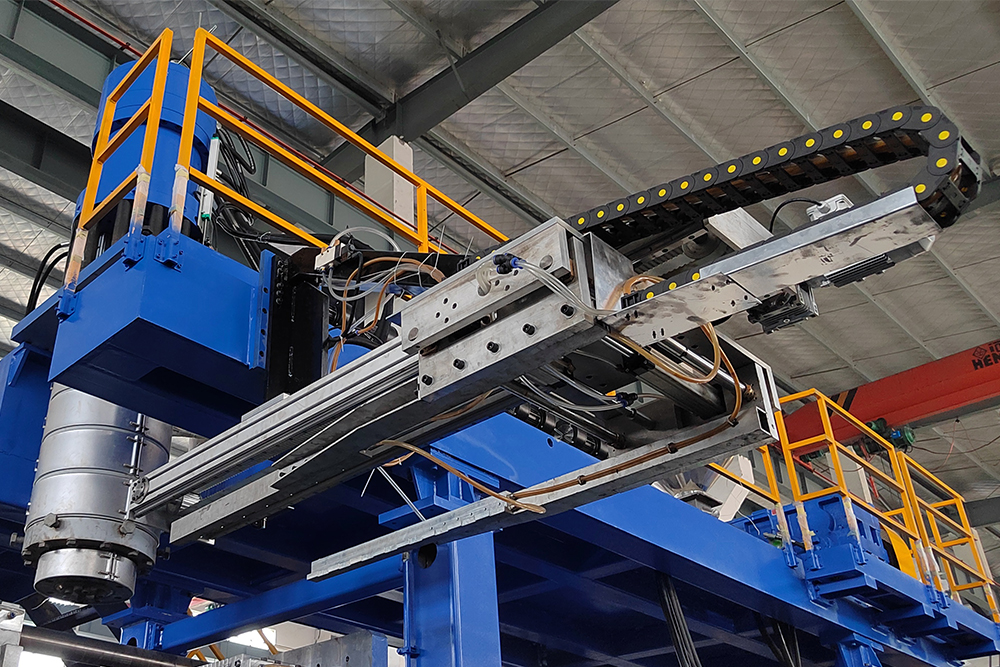
After blow molding, the drum must be removed or transferred safely. Large drums are not easy for operators to handle repeatedly. Automatic take-out or controlled conveyors can reduce physical strain and prevent product damage. Good transfer design also keeps the molding area clear and safe.
The transfer system should match the drum size and the machine cycle. If drums wait too long near the mold, the production rhythm slows. If the transfer system moves too aggressively, it may damage hot products. A balanced system protects both output and product quality.
Trimming automation improves consistency
220L drums often require deflashing or trimming around specific areas. Manual trimming may be acceptable for low-volume production, but it can create variation and labor dependency. Automatic or semi-automatic trimming improves consistency and helps the line keep pace with the blow molding machine.
When evaluating trimming automation, buyers should consider tool change, product size range, edge quality, maintenance, and scrap collection. A trimming station that works well for one drum design may require adjustment for another. If multiple drum types are planned, flexibility should be discussed before purchase.
Leak testing must be synchronized
Leak testing is essential for chemical packaging drums. The test method should be suitable for the product and customer requirements. In an automatic line, leak testing capacity must match upstream output. If the test station is too slow, drums will accumulate and reduce the value of automation.
The rejection system is also important. Defective drums should be removed clearly without mixing with accepted products. Some factories benefit from data recording, especially when supplying demanding customers. Even basic data can help identify trends, such as repeated failures after a material change or mold adjustment.
Cooling and buffering need intelligent layout
Large drums may need time to cool and stabilize before testing, stacking, or packing. Automation does not eliminate this requirement. It only helps organize it. Conveyors, buffer areas, and cooling zones should be designed according to the product and cycle time.
A common mistake is to focus on the main machine and leave insufficient space for cooling and buffering. This forces operators to move drums manually or store them in aisles. A well-planned automatic line gives products enough time and space while keeping movement controlled.
Scrap handling should be connected to trimming
Trimmed flash and rejected products should have a defined route. A scrap conveyor, crusher, and return system may be included when material reuse is permitted. If scrap handling is manual, the factory may face extra labor, dust, and disorder around the trimming station.
Automation should keep the production area clean. This improves safety and reduces the chance of material contamination. The scrap system should be sized according to expected flash volume and product weight.
Human operators still matter
A full automatic line does not mean no operators. People still monitor alarms, inspect quality, manage materials, maintain equipment, and handle exceptions. Automation changes the operator’s role from repetitive handling to process supervision. This requires training.
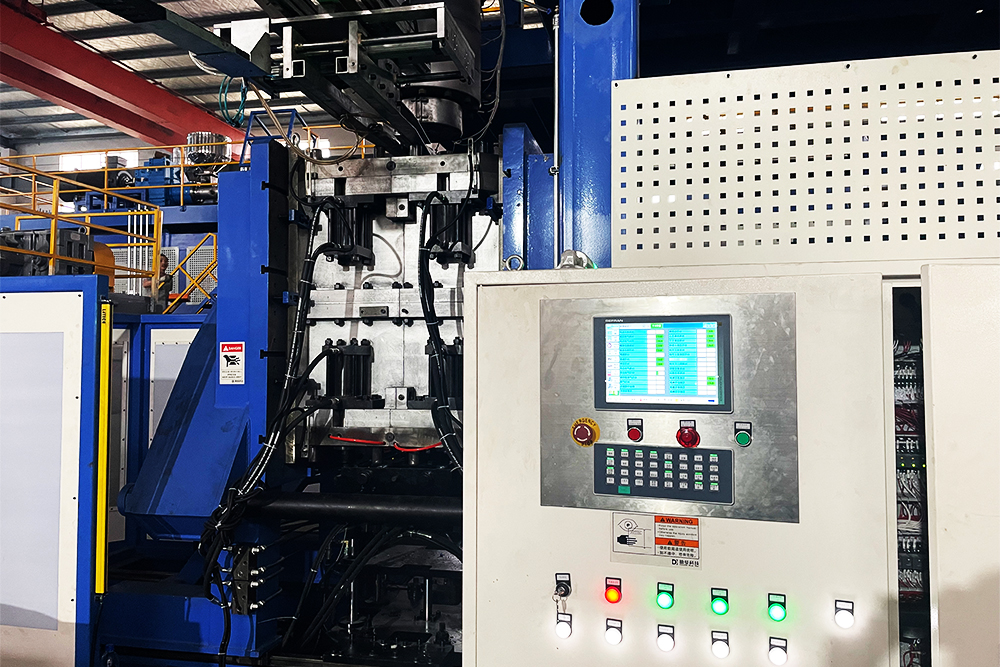
The control system should be clear and practical. Operators need to understand recipes, alarm messages, start-up procedures, shutdown steps, and emergency stops. Maintenance teams need access to sensors, motors, hydraulic systems, conveyors, and safety devices. Automation should make the plant easier to run, not harder to understand.
Compare automation by return, not appearance
Some automation options look impressive but may not provide the best return. Buyers should evaluate each function by asking what problem it solves. Does it reduce labor? Improve safety? Reduce scrap? Increase output? Improve testing reliability? Reduce product damage? Support future expansion?
A factory with low labor cost and moderate output may choose selective automation. A high-volume chemical drum producer may need a more complete automatic line. The best supplier will provide different options and explain the trade-offs rather than pushing the most expensive configuration.
Layout decides whether automation works
Automation requires space and logical flow. The layout should show material input, machine position, trimming, cooling, testing, rejection route, scrap return, accepted product flow, and finished goods storage. Forklift routes and maintenance access must remain clear. Safety guarding should not block daily operation.
Before ordering, buyers should review the layout with production, maintenance, and warehouse teams. A line that looks compact on paper may be difficult to operate if it ignores real movement. Automation succeeds when it improves the entire factory flow.
Automation should be scalable
Demand may grow after the first line is installed. A scalable automation plan reserves space for additional testing, longer conveyors, more storage, or a second line. It also considers utility capacity and control-system expansion. Planning for growth early is usually cheaper than rebuilding later.
For 220L drum production, automation should be treated as a long-term operating strategy. It is not only about reducing today’s labor. It is about creating a stable production system that can support larger orders, stricter quality standards, and safer handling.
A complete automatic line is a balanced system
A full automatic 220L plastic drum production line is valuable when each section supports the next. Blow molding, trimming, cooling, leak testing, scrap handling, and finished product movement must be synchronized. The buyer should compare proposals by practical qualified output, operator count, quality control, maintenance access, and expansion potential.
The right automation plan helps the factory produce large HDPE drums with less manual handling, more consistent quality, and better control over daily production. It should make the plant more reliable, not merely more complex.