Home » About Us » HUAN News » Blog » 220L Closed Top Drum Production Line vs Open Head Drum Manufacturing Equipment: Which System Fits Your Market?
220L Closed Top Drum Production Line vs Open Head Drum Manufacturing Equipment: Which System Fits Your Market?
Views: 1 Author: Site Editor Publish Time: 08-08-2026 Origin: Site
A buyer comparing a 220L closed top drum production line with 220L open head drum manufacturing equipment should begin with the market, not the machine. Closed-top drums and open-head drums serve different packaging needs. They may share extrusion blow molding principles, but the mold, finishing process, closure system, testing, handling, and customer requirements can be different.
Closed-top drums are often used for liquids that require secure filling and discharge points. Open-head drums may be preferred when products need a removable lid, wide access, or easier filling for certain materials. The correct line depends on the packed product, cleaning needs, transport route, closure standard, and customer habits.
Compare market applications first
Drum Type
Common Application Logic
Customer Focus
Production Concern
Closed-top drum
Liquid chemicals, lubricants, industrial liquids
Sealing, leak control, handling strength
Neck/opening accuracy and leak testing
Open-head drum
Products needing wide access or removable lid
Lid fit, rim quality, handling, cleanability
Rim forming, lid compatibility, dimensional control
Double L-ring closed top
Transport and stacking applications
Ring strength and secure handling
Ring wall thickness and mold cooling
Special chemical drum
Higher control packaging
Traceability and material consistency
Quality records and test process
The mold and finishing process are not identical
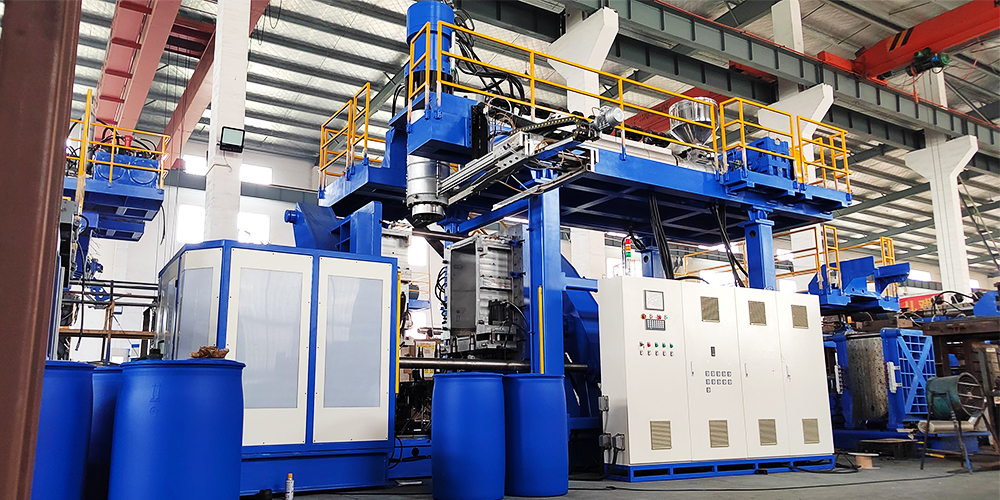
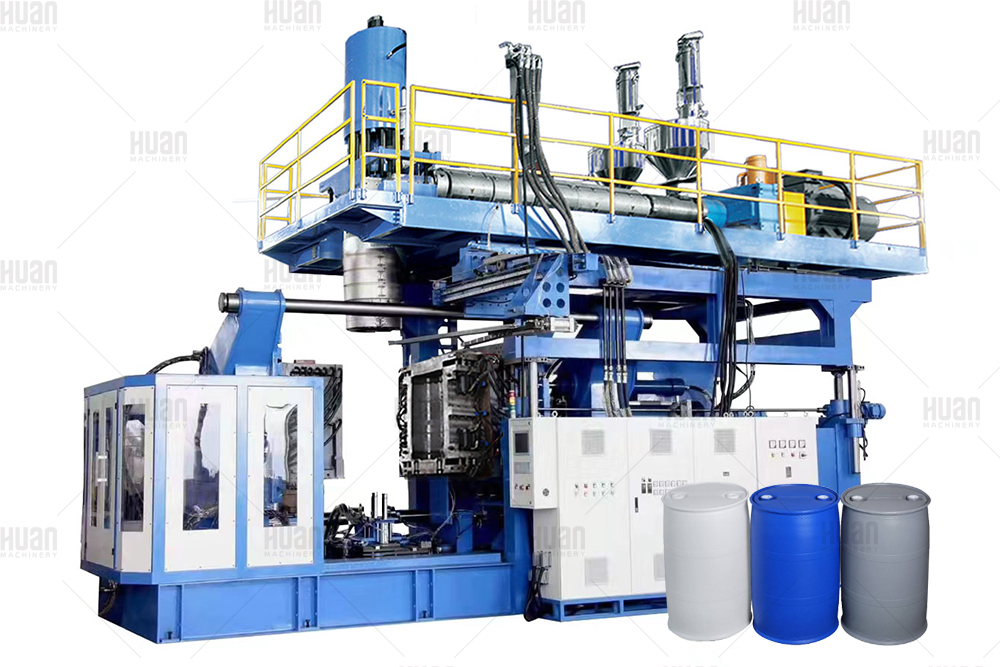
An extrusion blow molding machine for 220L drum must be configured around the intended product. For a closed-top drum, neck and opening details are critical. For an open-head drum, the top rim and lid interface become more important. If the buyer wants both drum types, the supplier must evaluate mold change, finishing equipment, floor space, and operator training.
Design Area
Closed Top Focus
Open Head Focus
Top structure
Small openings and closure sealing
Wide opening and rim geometry
Finishing equipment
Neck or opening trimming and cap compatibility
Rim finishing and lid fit
Testing
Leak test through defined openings
Leak or fit testing according to design
Handling
Ring and body strength
Rim, body, and lid assembly handling
Changeover
Mold and closure-related parts
Mold and rim finishing tools
Do not choose only by advertised machine capability
A supplier may say that one220L plastic drum blow molding machine can produce different drum designs. That may be true, but buyers must ask what changes are required. Mold cost, cooling design, trimming fixtures, leak testing method, conveyors, and operator procedures may differ. The total project should be compared, not only machine body compatibility.
Buyer Question checklist:
·Can the same machine produce both types?: Why It Matters: Confirms machine platform flexibility.
·What molds and finishing tools are needed?: Why It Matters: Defines real investment and changeover time.
·How long does changeover take?: Why It Matters: Affects production scheduling.
·Are testing stations shared or separate?: Why It Matters: Affects quality control and floor space.
·Can output targets be met for each product?: Why It Matters: Prevents planning based on only one drum type.
Quick note: Closed-top line decision - Choose when the market focuses on liquid packaging, leak control, secure closure, and repeatable industrial transport. Open-head equipment decision - Choose when customers need wide opening access, removable lids, or a product handling process that does not fit small openings.
Automation and handling differ by drum type
A full automatic 220L plastic drum production line for closed-top drums may emphasize opening trimming, leak testing, cooling, and transfer. An open-head line may need more attention to rim finishing, lid compatibility, and assembly handling. Automation should be selected for the actual product flow, not copied from another factory.
Automation Area
Closed Top Line
Open Head Line
Trimming
Opening and closure area
Rim and top edge
Testing
Leak test with closure logic
Fit and leak-related checks
Handling
Stable transfer after molding
Protection of rim geometry
Packing
Standard drum stacking and dispatch
Possible lid and ring component management
Quality data
Leak result and weight record
Rim dimension and closure fit record
How to make the final decision
Buyers should list expected products, customer industries, closure systems, daily output, available workshop space, and future product plans. If the market is not fixed, a modular layout may be better than committing to one highly specialized line. If contracts are already clear, the line can be optimized around the dominant drum type.
Before choosing a 220L closed top drum production line or open-head configuration, buyers can request a drum-type selection guide and send your drum sample or drawing. This allows the equipment proposal to match the real product and reduces the risk of buying a machine that can make a drum shape but not the right market-ready package.
Suggested image layout: Opening - Closed top and open head drum comparison (ALT: 220L closed top drum production line and open head drum manufacturing equipment comparison); Mold section - 220L drum mold or ring detail (ALT: extrusion blow molding machine for 220L drum mold design and finishing process); Automation section - Finished drums on production line (ALT: full automatic 220L plastic drum production line for industrial packaging).
Consider future product expansion
Some buyers start with one drum type and later receive inquiries for another. If future expansion is likely, the first project should reserve space, utilities, and control capability for additional molds or finishing stations. This does not mean buying everything immediately. It means avoiding a layout that blocks future production options.
Future Plan checklist:
·Add another drum type: What to Reserve: Mold storage and changeover space; Reason: Reduces later reconstruction.
·Increase automation: What to Reserve: Conveyor route and control interface; Reason: Makes later upgrade easier.
·Serve export customers: What to Reserve: Testing and record space; Reason: Supports stronger quality requirements.
·Add more output: What to Reserve: Cooling and power capacity; Reason: Prevents utility bottleneck.
·Handle more closures: What to Reserve: Component storage and assembly station space; Reason: Protects packaging flexibility.
A line that supports future expansion gives the buyer more market flexibility. It is especially useful in regions where chemical, lubricant, and industrial packaging demand changes quickly.
Buyers should also consider how each drum type will be presented to customers. If the sales team sells mostly liquid chemical packaging, closed-top drums may be easier to standardize. If customers pack viscous products, powders, or products that need wide access, open-head designs may provide better usability. Market interviews with existing customers can prevent the factory from investing in a line that makes a technically good drum but not the drum the market wants.
Customer Question checklist:
·How will the product be filled?: What the Answer Reveals: Opening size and filling speed requirement.
·How will the product be discharged?: What the Answer Reveals: Closure and end-user handling needs.
·Will the drum be reused or cleaned?: What the Answer Reveals: Open-head access or closure requirement.
·How will drums be transported?: What the Answer Reveals: Ring strength and stacking requirement.
·Which packaging type is already accepted by customers?: What the Answer Reveals: Market adoption risk.