Home » About Us » HUAN News » Blog » 220L Chemical Drum Production Equipment for Closed Top, Open Head, and Multi-SKU Manufacturing
220L Chemical Drum Production Equipment for Closed Top, Open Head, and Multi-SKU Manufacturing
Views: 0 Author: Site Editor Publish Time: 31-08-2026 Origin: Site
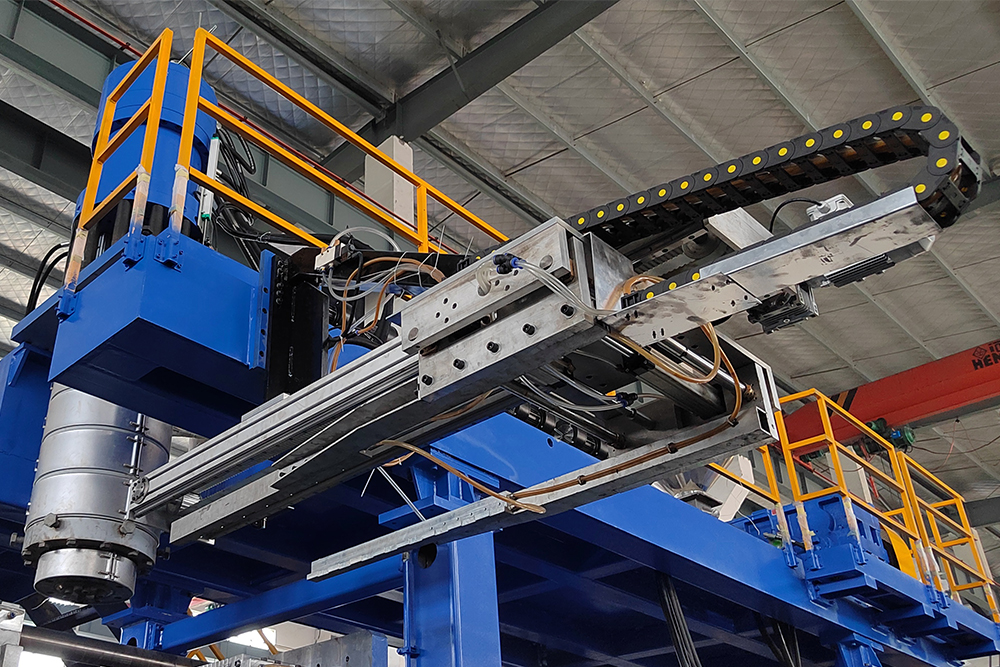
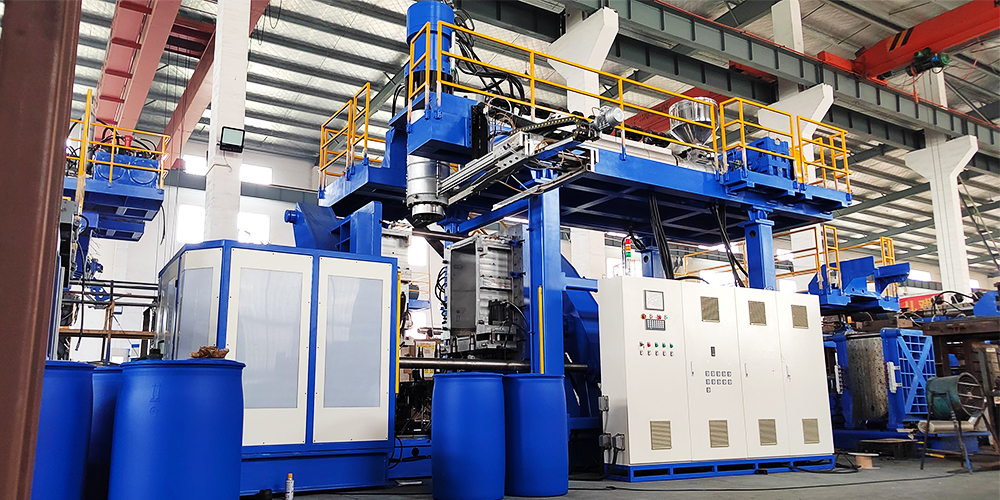
A 220L drum project is a large-container project where material distribution, mold strength, cooling, handling, and testing directly influence whether the drum is suitable for chemical, lubricant, or export packaging. The equipment decision should therefore be connected to the target drum design and the factory’s long-term product plan. The article focuses on factories that do not make only one drum. It helps readers plan around product families and changeovers. The page should keep the keyword 200L chemical drum production equipment in a natural position while also using supporting phrases such as 220L closed top drum production line, 220L open head drum manufacturing equipment, 220L chemical barrel production line supplier. The red phrases in this document are suggested anchor texts: product-related anchors should point to product pages, and contact-related anchors should point to the contact or inquiry page.
Closed Top vs Open Head Planning Table
Drum type
Key production concern
Equipment planning point
Closed top
Neck accuracy, sealing surface, and leak performance
Mold design, trimming method, and leak-test definition.
Open head
Top opening, ring fit, lid compatibility, and body strength
Cutting/finishing support and downstream inspection fixtures.
Multi-SKU family
Changeover time and fixture storage
Mold handling route, recipe library, and tool management.
A chemical drum factory often sells more than one SKU
The most practical way to approach this topic is to treat 200L chemical drum production equipment as a working production project instead of a single equipment label. Buyers who arrive from search usually have already seen several product pages, but they still need to understand how decisions inside the factory will influence output, quality, and long-term operating cost. That is why this article focuses on the decision logic behind 220L drum production line, not only on the machine name.
In real production, the finished 220L HDPE drum is the result of several linked controls. Material must arrive in a stable condition, the extrusion process must create a predictable parison, the mold and cooling system must hold dimensions, and downstream inspection must remove uncertainty before the product reaches the customer. When the project is planned with this chain in mind, the buyer can compare suppliers more fairly and avoid choosing a configuration that looks attractive only on paper.
Closed top drums put more attention on neck and sealing zones
A strong project discussion begins with the product specification. Capacity, weight, opening design, layer structure, application, stacking requirement, and expected monthly output all affect the 220L drum blow molding machine recommendation. If the buyer provides only a general keyword such as 200L chemical drum production equipment, different suppliers may quote different scopes, which makes price comparison misleading.
The better method is to prepare a compact technical package. It should include drawings or samples, target weight, production target, factory utilities, labor condition, and preferred automation level. With these details, the supplier can explain whether the buyer needs a basic machine, a more automated station, or an integrated 220L drum production line. This also helps the article convert search traffic into serious inquiries.
Changeover Planning Checklist
Changeover item
Question to answer
Mold change route
Can crane access the machine without blocking finished goods?
Recipe management
Are temperature, parison, and cycle settings saved clearly?
Inspection setup
Does each SKU have its own quality sheet and acceptance rule?
Component storage
Are lids, rings, closures, and labels separated by product?
Open head drums change downstream handling and inspection
The production route must be balanced. A high-output main machine does not create high accepted output if trimming, testing, assembly, packing, or material feeding cannot keep pace. This is why the article should use terms such as 220L closed top drum production line, 220L open head drum manufacturing equipmentnaturally, while still explaining the operating reality behind those keywords.
For many overseas buyers, the most valuable supplier is not the one that uses the longest equipment list. It is the one that can identify where the bottleneck will appear after installation. Sometimes the bottleneck is cooling time, sometimes it is operator handling, and sometimes it is quality inspection. A well-planned configuration reduces these risks before production begins.
Changeover planning protects daily output
Quality control should be described as a chain of decisions rather than a final pass-or-fail station. Material recipe, wall distribution, mold condition, machine movement, cooling, trimming, and final inspection all create the final result. When one stage changes without a record, the factory loses the ability to explain why a defect appeared.
A practical quality system uses simple but consistent records. Operators should know what to check, supervisors should know which data to review, and maintenance staff should know which symptoms require action. This gives the factory a routine that can survive operator changes, shift changes, and product changeovers.
RFQ Data for Multi-SKU Projects
Data
Example detail
SKU list
Closed top 220L, open head 220L, 200L chemical drum.
Drawing package
Neck, handle, ring, wall target, and stacking requirement.
Output split
Expected percentage of each SKU per month.
Changeover expectation
Maximum acceptable downtime between SKUs.
A multi-SKU quotation must include mold and fixture logic
From a purchasing perspective, the quotation should make scope visible. Buyers should ask what is included, what is optional, and what must be prepared locally. This includes molds, feeding systems, cooling equipment, conveyors, trimming devices, testing equipment, spare parts, installation support, training, and future expansion space.
The supplier conversation becomes much more efficient when the buyer can request a multi-SKU drum plan or contact us with your drum drawings. Instead of receiving a general price, the buyer can receive a practical configuration that fits the product, factory, output target, and market stage.
How to Use This Article for Search Traffic and Sales Follow-Up
This article should be published as a practical decision page, not as a short product announcement. The opening answers the search question, the middle sections explain the factory logic, and the tables give the reader a reason to stay on the page longer. That structure helps the content serve informational search intent while still preparing the buyer for a commercial conversation. The page can also support remarketing, email follow-up, and internal sales training because it turns one keyword into a complete purchasing discussion.
When sales staff use this article with inquiries, they can point the buyer to the most relevant section instead of sending only a catalogue. For example, a buyer asking about price can be guided to the scope and planning tables; a buyer asking about quality can be guided to the inspection and documentation section; and a buyer asking about delivery can be guided to the project sequence. This makes the article useful after ranking, which is important because SEO traffic only becomes valuable when the content helps move the visitor to the next step.
Publishing and Internal Link Note
Use the four red product anchors in the body to connect readers to equipment pages: 200L chemical drum production equipment, 220L closed top drum production line, 220L open head drum manufacturing equipment, extrusion blow molding machine for 220L drum. Use the two red contact anchors to convert readers who are ready to share drawings, samples, output targets, or factory conditions: request a multi-SKU drum plan, contact us with your drum drawings. Keep image ALT text close to the keyword topic, but avoid keyword stuffing.